
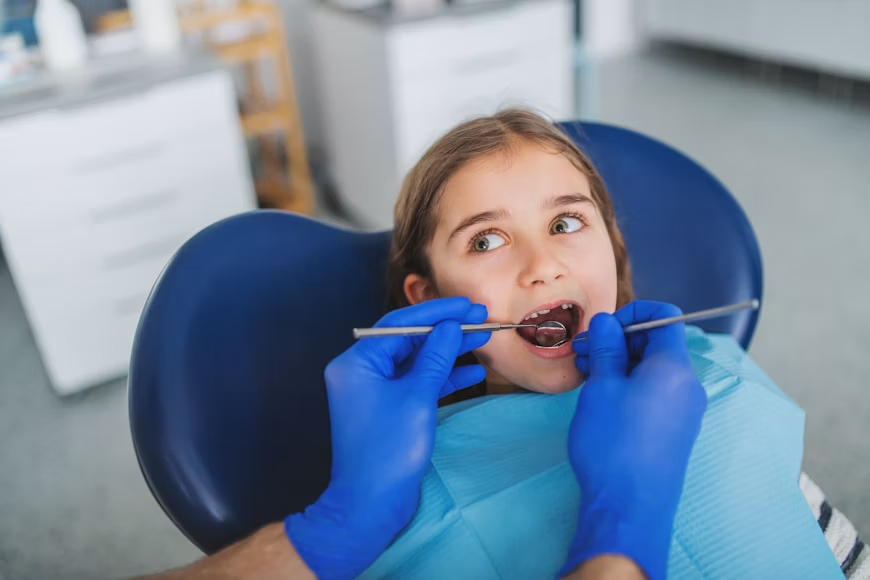
You might be staring at your child’s tiny teeth, wondering if you are already behind on dental visits, or if you can safely wait a little longer before visiting a Plymouth dental office. Maybe you have heard different opinions from relatives, social media, even other parents at school. One says “Go as soon as the first tooth appears.” Another says “Wait until all the baby teeth are in.” No wonder it feels confusing.
On top of that, you may be juggling school, work, activities, and the simple task of getting your child to sit still for a haircut, let alone a dental appointment. Because of all this, it is very easy to postpone that first visit and hope that brushing at home is enough for now.
Here is the good news. There are some clear signs that it is time to schedule your child’s first dental cleaning, and once you know what to watch for, the whole decision becomes a lot less stressful. In short, if you notice any of the four signs below, or your child is around their first birthday, it is time to meet a family dentist. That first visit is not about judgment. It is about gentle prevention, early guidance, and helping your child feel safe in the chair.
Why does timing matter for a child’s first dental cleaning?
It can feel tempting to think, “They are just baby teeth. They will fall out anyway.” Many parents feel that way at first. But baby teeth hold space for adult teeth, affect speech, and make a big difference in how comfortably a child eats and sleeps. When these teeth hurt, your child hurts, and that can affect school, behavior, and even their confidence.
Public health data shows that tooth decay is one of the most common chronic conditions in children. The Centers for Disease Control and Prevention has reported high rates of early childhood cavities and stressed how preventive visits reduce that risk. You can see this discussed in more detail in the CDC’s guidance on community oral health and prevention.
So where does that leave you as a parent? You want to avoid painful emergencies and big treatment bills. You also do not want to push your child into a scary experience before they are ready. This is where a few practical signs can help you decide when to schedule that first child dental cleaning appointment with a trusted family dentist.
Sign 1: Your child’s first tooth has appeared (or they just turned one)
One of the clearest signs is also the easiest to miss, because it feels so early. The general rule many dental and medical organizations support is “first tooth or first birthday, whichever comes first.” That first tooth is your starting line.
Why so early? Because the first visit is not about scraping and polishing. It is usually a gentle look around, a quick clean if needed, and a calm introduction to the office. This early timing lets the dentist catch any early enamel issues, show you how to clean those tiny teeth, and talk through diet and habits like bottles or sippy cups.
Imagine two toddlers. One sees a dentist at twelve months. The other waits until age four. The first child gets used to the chair, has tiny issues handled early, and parents get tailored advice. The second child arrives only when there is visible decay and pain. The experience is more urgent, more emotional, and usually more expensive. Same age group, very different journeys.
Sign 2: You notice white spots, brown areas, or chipping on baby teeth
Another clear sign is any visible change in the color or surface of your child’s teeth. Early cavities often start as faint white or chalky spots near the gumline. These can be easy to overlook, especially on busy mornings. As decay progresses, you might see light brown or darker areas, or notice that a tooth looks rough, chipped, or “pitted.”
At this stage, you might feel a mix of guilt and worry. Many parents quietly think, “Did I cause this? Did I miss something with brushing or snacks?” That self blame is common, but it is usually not helpful. What matters most is what you do next. A family dentist can often treat early spots with minimal or no drilling, using fluoride, sealants, and small changes in home care. The sooner a child is seen, the more gentle the solutions can be.
Sign 3: Your child complains of tooth pain or avoids certain foods
Children do not always say, “My tooth hurts.” Sometimes the signs are subtle. They might chew on only one side. They might avoid cold foods like yogurt, or suddenly refuse crunchy snacks they used to enjoy. You might notice them waking up at night touching their mouth, or becoming irritable at mealtimes.
Any of these can be your child’s way of saying, “Something does not feel right.” Pain in baby teeth can come from cavities, gum inflammation, or even something as simple as food getting trapped between teeth. A first professional dental cleaning for kids allows the dentist to clear away buildup, check the gums, and see if there is an underlying problem that needs treatment. It can also give your child relief and reassurance that their mouth can feel comfortable again.
Sign 4: Brushing battles are constant and you feel out of your depth
There is another sign that is easy to dismiss, because it is about behavior more than teeth. If tooth brushing has turned into a daily battle, with tears, wrestling, or outright refusal, it is time for support. Many parents feel embarrassed to admit this, yet it is incredibly common.
A family dentist who works with children every day understands these struggles. That first cleaning visit is a chance to show your child that dental care does not have to be scary. The team can demonstrate brushing techniques, suggest positions that work better for wiggly kids, and help you set a simple routine. Over time, regular visits can actually reduce the emotional resistance at home, because the whole idea of “teeth care” feels normal, not strange or frightening.
What happens if you wait vs scheduling now?
You might still be asking yourself, “What is the real difference if I wait another year?” To make this more concrete, it helps to compare two paths. One where you schedule your child’s first dental cleaning early, and one where you delay until there is a clear problem.
| Choice | Short term experience | Typical costs and time | Long term impact on your child |
|---|---|---|---|
| Schedule early with a family dentist | Quick, gentle visit. Mostly education, a light cleaning, and a chance for your child to look around and get comfortable. | Short appointment, usually lower cost preventive care. Often covered well by dental insurance plans. | Better chance to prevent cavities. Fewer urgent visits. Child grows up seeing dental care as routine, not scary. |
| Wait until there is pain or obvious decay | Visit often triggered by pain or infection. Child may already be fearful or uncomfortable in the chair. | Longer appointments, higher likelihood of fillings, crowns, or extractions. Higher out of pocket costs. | More missed school and sleep. Stronger fear of dental care. Greater risk of problems in adult teeth later on. |
Dental organizations such as the American Dental Association emphasize early, preventive visits for exactly these reasons. They point to the importance of regular care in protecting children’s health and limiting the need for emergency treatment. You can see how strongly this is supported in the ADA’s discussion of access to dental care and prevention.
Three simple steps you can take right now
1. Check your child’s teeth under good light
Choose a calm moment, not when everyone is rushing out the door. Use a small flashlight or stand by a window. Gently lift your child’s upper lip and look at the front teeth near the gumline. Look for white spots, brown areas, or chipping. Do the same for the lower teeth. You are not trying to diagnose. You are just looking for anything that feels off. If you see something, that is your cue to contact a family dentist soon.
2. Mark a “first visit” window on the calendar
If your child has a first tooth, or has turned one, pick a two to four week window and commit to scheduling that first family dentist visit. Treat it like a well child check, not a crisis. When you call, mention that it is their first dental cleaning, and ask the office how they introduce young children. Many offices offer “happy visits” where the child can sit in the chair, count their teeth, and get a quick polish, keeping the experience light.
3. Start a calm, consistent brushing routine
Even before the appointment, you can make a meaningful difference at home. Twice a day, use a tiny smear of fluoride toothpaste for children under three, or a pea sized amount for older kids, unless your dentist or pediatrician recommends otherwise. Make brushing part of a predictable routine, such as after breakfast and before bed. If your child resists, try a simple song, a short timer, or taking turns. You brush for a few seconds, then they “check your work.” The goal is progress, not perfection.
You are not behind, but now is a good time to start
If you recognized your child in any of these four signs, you are not alone, and you are not too late. Many parents arrive at that first cleaning visit with similar worries, and most leave feeling relieved that they finally have a clear plan.
A gentle first visit with a family dentist can turn dental care from a source of stress into a small, manageable part of your child’s health routine. It gives you real answers, practical tips, and a partner who understands children’s teeth at every stage.
Your next step is simple. Take a quiet moment, look at your calendar, and choose a time to reach out to a nearby office that welcomes children. One call can move you from worrying about your child’s teeth to actively protecting them, starting with that first dental cleaning.
